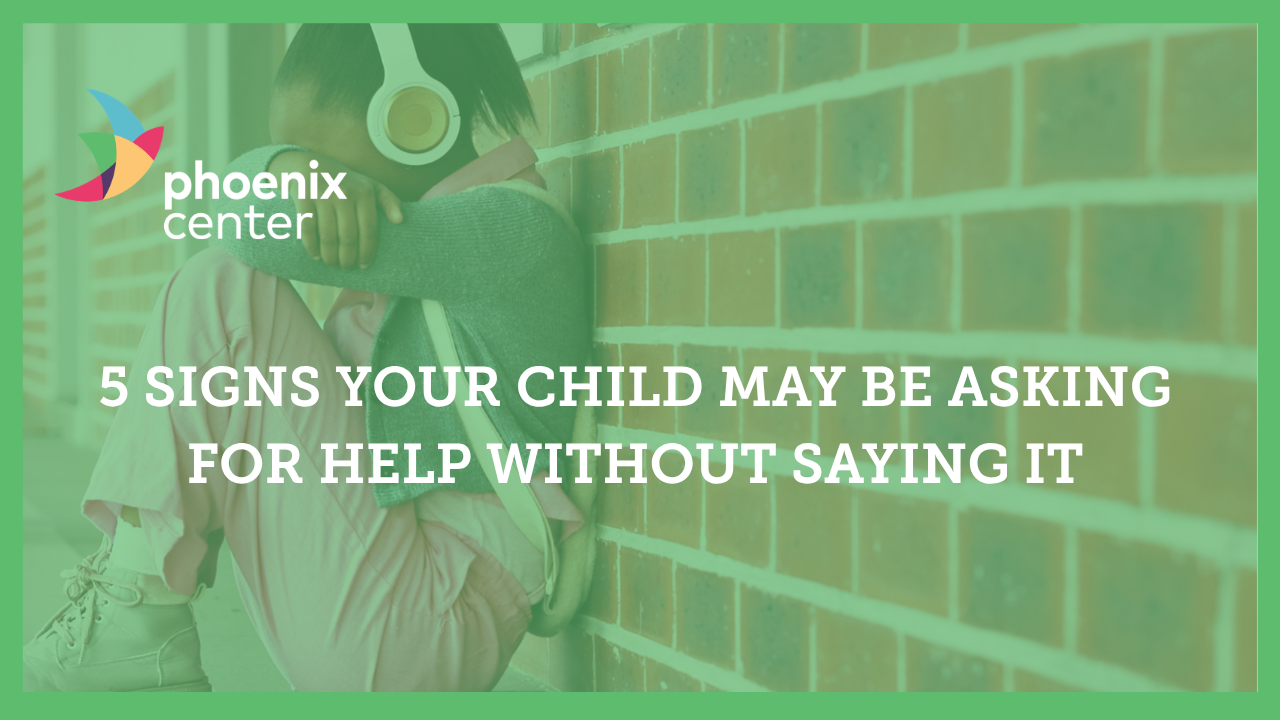
Sometimes the biggest cries for help aren't spoken out loud. They show up through behavior, emotions, and changes that are easy to overlook.
Our Phoenix Center therapists share what they want every parent and caregiver to know about recognizing those early signs.
CHILDREN RARELY SAY, “I’M STRUGGLING"

Instead, they may become quieter than usual, more emotional, more withdrawn, unusually clingy, or begin acting in ways that seem confusing or out of character. While every child has difficult days, persistent changes in behavior often invite a deeper look.
That doesn't mean every behavior is a cause for alarm. More often, it's an opportunity to become curious.
We asked our Phoenix Center therapists what they wish every parent, caregiver, teacher, and referral partner knew about recognizing the early signs that a child may need extra support.
Here's what they shared.
BEHAVIOR IS COMMUNICATION

One of the most important things parents and caregivers can remember is that all behavior is communication. Children don't always have the words to explain what they're feeling, so emotional distress often shows up through changes in behavior instead. While some signs, like frequent anger, excessive crying, or withdrawing from friends and family, may be easier to recognize, others are much more subtle. A child who suddenly becomes overly clingy, struggles with transitions, loses interest in activities they once enjoyed, develops frequent headaches or stomachaches, becomes unusually quiet, or seems like the "perfect" child through excessive people-pleasing or compliance may also be communicating that something isn't right.
Rather than asking, "What's wrong with my child?" it can be helpful to ask, "What might my child be trying to tell me?" Behaviors that seem frustrating, confusing, or out of character are often a child's attempt to cope with overwhelming emotions or unmet needs. Looking beneath the behavior with curiosity instead of judgment creates space for children to feel safe, understood, and supported.
YOU DON’T HAVE TO WAIT FOR CERTAINTY

Parents know their children better than anyone else. If something doesn't feel quite right, if you've noticed changes in your child's mood, behavior, or personality, or you find yourself wondering over and over whether they might need extra support, it's worth paying attention to that feeling.
You don't have to wait until you're certain something is wrong to reach out for help. Sometimes the best first step is simply having a conversation. Whether it's talking with your child's pediatrician, a trusted school counselor, or stopping by Phoenix Center's free walk-in mental health clinic on a Tuesday, asking questions early can provide reassurance, guidance, and support. Reaching out doesn't mean something is "seriously wrong." It means you're choosing to better understand your child, and that's one of the most caring things you can do.
WHEN CHANGES BECOME PATTERNS

Every child has difficult days, challenging seasons, and behaviors that are part of normal development. What often signals the need for a closer look is a noticeable change that persists over time or doesn't seem consistent with your child's age or typical personality.
Changes in attention, increased aggression, regression to earlier behaviors, intense emotional reactions, or new struggles that seem out of character may all be worth discussing with a trusted professional. Seeking an evaluation doesn't mean something is necessarily wrong; it simply provides an opportunity to better understand your child's needs and connect your family with helpful resources if they're needed.

SOMETIMES THE QUIETEST SIGNS TELL THE BEST STORIES
One of our therapists recently worked with a young child who struggled with transitions and experienced frequent emotional meltdowns. At first glance, those behaviors appeared to be simple difficulties with frustration or change. But as the therapist spent time getting to know the child and family, they uncovered an early medical experience that had significantly impacted the child's sense of safety. What looked like "challenging behavior" was actually revealing a much deeper story.
Experiences like this are a powerful reminder that children often communicate through their behavior long before they have the words to explain what they're feeling. Looking beyond the surface allowed the therapist and family to better understand the child's needs and begin supporting healing in a way that addressed the root cause, not just the behavior itself.
CONCLUSION
The goal isn't to become an expert at recognizing every warning sign. It's simply to stay curious. When we respond to changes in a child's behavior with compassion instead of assumptions, we create opportunities for connection, understanding, and healing. Sometimes asking one simple question,
“I wonder what my child is trying to tell me?"
can be the first step toward getting the support they need.

WE’VE GOT YOU
Phoenix Center offers low- or no-cost mental healthcare for children, teens, and families.
If you're wondering whether your child could benefit from therapy, or if you're a teacher, physician, counselor, or community partner looking for guidance, we're here to help you navigate the next steps. Whether that means scheduling an appointment, visiting our free-of-cost walk-in clinic, or simply asking questions, our Phoenix Center team is happy to help you find the right fit for your child and family.
Every Family Deserves the Opportunity to Thrive.
Ready to connect?
Call Us: 830.637.7848
Email Us: Info@phoenixtx.org