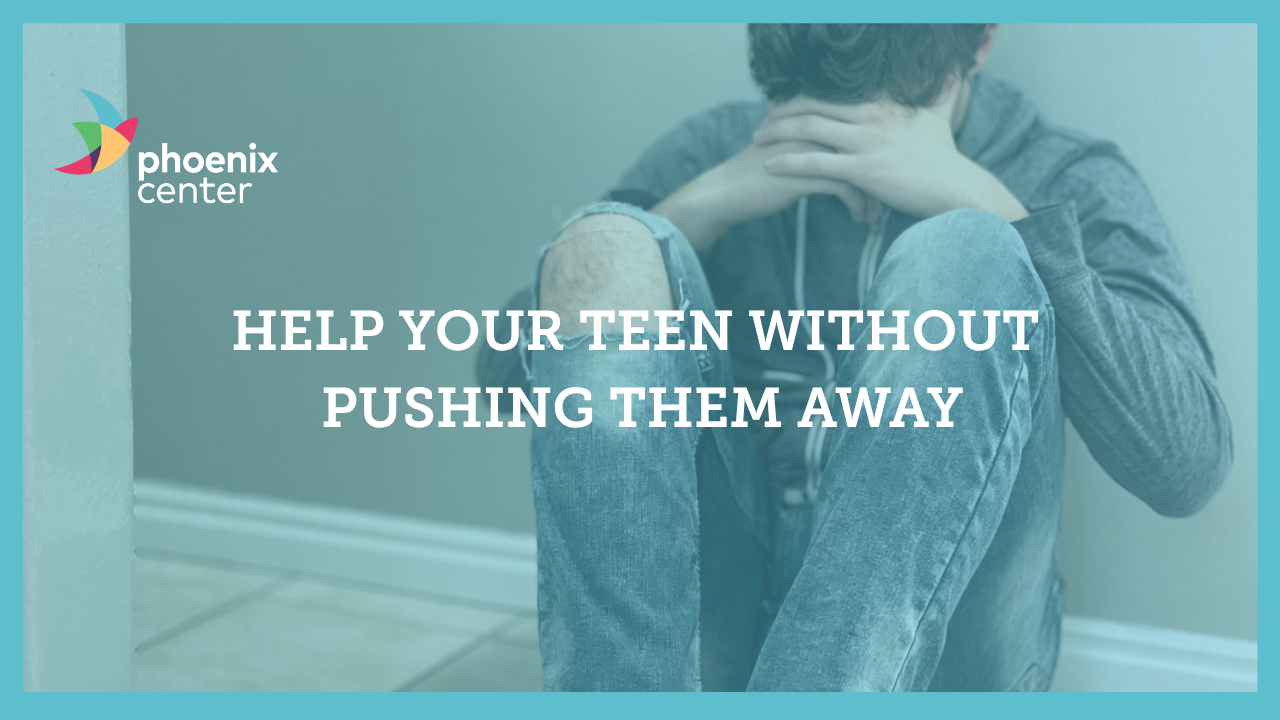
Growing more independent doesn't mean they have to grow without you.
INTRODUCTION

The teenage years can leave even the most connected parents wondering,
“Am I giving them too much space…or not enough?”
As teens begin seeking more independence, privacy, and connection outside the family, knowing when to step in and when to step back isn't always easy, especially when you're concerned about your teen's mental health.
We asked Phoenix Center therapists what they wish parents understood about this season, including how to communicate with teenagers, recognize signs that a teen may need additional mental health support, and create the kind of relationship teens feel safe coming back to.
THEY ARE NOT REJECTING. THEY ARE GROWING.

One of the hardest shifts for parents during the teenage years can be feeling like the child who once wanted to tell you everything suddenly wants more privacy, more time with friends, and less time with you. While it can feel personal, this growing independence is often a normal and important part of adolescence. Teens are beginning to figure out who they are outside of their family, where they belong socially, and how to navigate the world with greater independence.
The challenge is remembering that teenagers are somewhere in between childhood and adulthood.
Sometimes we expect them to handle situations as if they are already adults; other times, we respond to them as if they are still young children. In reality, they're learning how to become independent while still needing the safety, guidance, and connection of the adults who care about them.
That can be especially important to remember when independence shows up as irritability, anger, or withdrawal. What we see on the surface isn't always the whole story. Anger may be covering sadness, loneliness, insecurity, or even a need for connection that a teenager doesn't know how to express.
Rather than taking their distance personally or trying to force closeness, give them room to grow while continuing to create opportunities for connection. Respect their increasing need for privacy and autonomy, stay curious about what's underneath their behavior, and remind them through your presence that growing more independent doesn't mean they have to grow without you.
SIGNS YOUR TEEN MAY NEED ADDITIONAL SUPPORT

Teenagers are going to have big feelings. They may want more privacy, experiment with independence, change interests, take risks, or go through periods when they seem moodier or less communicative than usual. So how do you know when what you're seeing is simply part of adolescence, and when it's time to pay closer attention?
Rather than looking at one isolated behavior, our therapists encourage parents to look for changes, patterns, intensity, and impact.
A bad day is different from a low mood that lingers.
Wanting more time alone is different from withdrawing from both family and friends.
Trying something new and testing a boundary is different from an escalating pattern of risky behavior.
And,
Changing interests is different from suddenly losing interest in nearly everything a teen once enjoyed.
Pay particular attention when behaviors begin interfering with everyday life or relationships. Significant changes in grades, friendships, sleep, interests, mood, or typical social behavior can signal that something deeper may be happening. More serious warning signs such as self-harm, substance use, frequently sneaking out, destructive anger, physical aggression, or increasingly dangerous behavior should always be taken seriously.
Perhaps most importantly, you know your teenager. Instead of asking only, “Is this normal for a teenager?” consider asking, “Is this normal for my teenager?” When several changes begin happening together, a behavior becomes more intense or frequent, or something simply doesn't feel right, you don't have to wait until it becomes a crisis to reach out for support.
START WITH “I WANT TO HELP”, NOT “YOU ARE IN TROUBLE”

When something is wrong, it can be tempting to address it the moment you notice it, especially when you're worried. But difficult conversations tend to go better when both you and your teen are calm enough to actually hear one another. Choose your timing carefully, then be honest and direct about what you've noticed without making your teen feel as though they've already been accused or judged.
Instead of dancing around the issue, try leading with curiosity: “Hey, I noticed you're struggling in math lately. What's going on?” or simply, “I'm here to listen if you need me.” If the concern involves their safety, say that too. Let them know you're bringing it up because you care about their well-being, not because they're automatically in trouble.
Just as important as how you begin is what you do once they start talking. Be prepared to listen, ask questions, and validate what they're feeling, even when you don't necessarily agree with their perspective.
Authenticity and openness from a parent can make it easier for a teenager to offer the same in return.
And remember, the first conversation doesn't have to solve everything. Sometimes success is simply making sure your teen walks away knowing, “I can talk to my parent about hard things without immediately getting in trouble.” Keeping that door open may be far more valuable than getting every answer in one conversation.

THEY STILL NEED YOU…
JUST DIFFERENTLY
Teenagers want to be treated like they're growing up, because they are. They want more independence, more say in their own lives, and the opportunity to figure things out without always being corrected or told what to do. But needing more independence doesn't mean they no longer need connection.
What teens often want most is to feel seen, heard, and taken seriously. Sometimes that means having an adult who will simply listen, not immediately offer a solution, lecture, or reprimand.
Giving your teen space to talk without trying to “fix” everything can communicate something powerful: I trust you. I value what you have to say. I'm in your corner.
It's also important not to take it personally if your teen doesn't always choose you as the person they want to talk to. Sometimes teenagers need someone outside of the family- a therapist, mentor, counselor, or another trusted adult who can offer a neutral place to process what they're experiencing. That doesn't mean you've failed or that your relationship isn't strong. Sometimes it's simply easier to say certain things to someone who isn't part of the situation.
Supporting your teenager isn't about making sure they tell you everything. It's about helping them know they don't have to navigate everything alone.
TRUST IS BUILT IN THE SMALL MOMENTS
When something is wrong, it can be tempting to address it the moment you notice it, especially when you're worried. But difficult conversations tend to go better when both you and your teen are calm enough to actually hear one another. Choose your timing carefully, then be honest and direct about what you've noticed without making your teen feel as though they've already been accused or judged.
Instead of dancing around the issue, try leading with curiosity: “Hey, I noticed you're struggling in math lately. What's going on?” or simply, “I'm here to listen if you need me.” If the concern involves their safety, say that too. Let them know you're bringing it up because you care about their well-being, not because they're automatically in trouble.
Just as important as how you begin is what you do once they start talking. Be prepared to listen, ask questions, and validate what they're feeling, even when you don't necessarily agree with their perspective.
Authenticity and openness from a parent can make it easier for a teenager to offer the same in return.
And remember, the first conversation doesn't have to solve everything. Sometimes success is simply making sure your teen walks away knowing, “I can talk to my parent about hard things without immediately getting in trouble.” Keeping that door open may be far more valuable than getting every answer in one conversation.
YOU DON’T HAVE TO HAVE ALL THE RIGHT WORDS

Supporting a teenager's mental health doesn't mean forcing every conversation or having the perfect response. Sometimes it's knowing when to give them space, when to create opportunities for connection, and when to simply make yourself available. That balance can be difficult, but your teen doesn't need perfection; they need to know there is a safe place to land when they're ready.
It's also important to meet your teen where they are, not simply where you expect them to be. Development doesn't always happen at the same pace in every area of a young person's life, and experiences such as trauma can affect emotional development even when a teen appears physically or socially to be right on track. Understanding that can help adults respond with greater patience and curiosity.
Most importantly, don't be afraid to talk about the hard things. Mental health, depression, anxiety, loneliness, relationships, mistakes, and struggles don't become more dangerous simply because we acknowledge them. Creating a home where difficult subjects can be talked about openly helps remove the shame that can keep teens silent.
And when something feels bigger than what you or your teen can navigate alone, reach out. Symptoms of depression and other significant changes in mental health should always be taken seriously, and seeking professional support early can give teens another safe place to be heard and supported.
Helping your teen without pushing them away isn't about holding on tighter. It's about staying close enough that, as they learn to navigate the world more independently, they always know where they can turn when they need you.
The goal isn't to become an expert at recognizing every warning sign. It's simply to stay curious. When we respond to changes in a child's behavior with compassion instead of assumptions, we create opportunities for connection, understanding, and healing. Sometimes asking one simple question,
“I wonder what my child is trying to tell me?"
can be the first step toward getting the support they need.

WE’VE GOT YOU
Phoenix Center offers low- or no-cost mental healthcare for children, teens, and families.
If you're wondering whether your child could benefit from therapy, or if you're a teacher, physician, counselor, or community partner looking for guidance, we're here to help you navigate the next steps. Whether that means scheduling an appointment, visiting our free-of-cost walk-in clinic, or simply asking questions, our Phoenix Center team is happy to help you find the right fit for your child and family.
Every Family Deserves the Opportunity to Thrive.
Ready to connect?
Call Us: 830.637.7848
Email Us: Info@phoenixtx.org